


MDABULO TANSANIA.


Fidelis E. Filipatali - RDP Tanzania

Mathias Muther - Solar Power Aid

Ralph Pöttinger - Alpine Group

Thomas Ogris - Kärnten Solar

Christian Dobesch - Kärnten Solar

Michael Luger - Eine-Welt-Gruppe Schlins / Röns

Reinhold und Bernhard - Eine Weltgruppe Schlins / Röns

Emilia Muther - Tochter von Mathias Muther
Mdabulo
Mdabulo is located in the highland regions of the Udzungwa Mountains in southwestern Tanzania. The village is known for its remote location and the challenging living conditions of its population. Since the majority of residents rely on agriculture but face unpredictable weather conditions such as heavy rains and prolonged dry periods, a stable power source was urgently needed.
Solar Power Aid is proud to have implemented its first project in Mdabulo, Tanzania. Through this project, clean and sustainable solar energy is now available in the region, providing access to a reliable energy supply.

Future-Proof Solar System: Expandable Energy Source Thanks to Modern Technology
In collaboration with Kärnten Solar, Solar Power Aid has installed a solar system consisting of 10 modules, each with a capacity of 430 Wp (a total of 4.3 kWp), and a 5-kW inverter. Thanks to the generously sized inverter capacity, the system can be easily expanded in the future without requiring the replacement of the inverter. With its current capacity of 4.5 kWp, the system can produce approximately 6,000 kWh of clean energy annually, making a significant contribution to sustainable power supply.
Sustainable Energy for Mdabulo: Solar Power Transforming Daily Life and Mobility
The new photovoltaic system now provides Mdabulo with a stable energy source that has sustainably improved the daily lives of its residents. The abundant sunlight in the region made solar energy the ideal solution for local electricity needs.
The solar system also enables electric vehicles in the village to be charged. Currently, there are four electric vehicles, including a three-wheeled Tuk Tuk donated by the Eine Weltgruppe Schlins / Röns. This vehicle, well-suited for rough terrain, is easy for women to operate. It is used to transport water and food to nearby villages and markets. As a result, women and children no longer have to carry heavy loads on their heads, significantly easing their daily burdens.
During the initial installation, Solar Power Aid received active support from Thomas and Christian of Kärnten Solar. Both fulfilled a long-held dream of using their expertise to provide assistance in a developing country. For Kärnten Solar, collaborating with Solar Power Aid was a heartfelt project, and they are proud to be part of such an impactful initiative. A heartfelt thank-you for this outstanding support!
Special thanks go to Hansesun Austria GmbH, which donated the 10 modules with a total capacity of 4.5 kWp for this project. The donated modules play a crucial role in promoting eco-friendly power generation and actively shaping the energy future. Thank you for this invaluable contribution!
Another special thank-you goes to Ralph Pöttinger of the Alpine Group, who decided to provide financial support to Solar Power Aid. He was impressed by the concept of donations being used directly for on-site projects, such as the initiative in Mdabulo, Tanzania, rather than being sent anonymously to an account. Ralph Pöttinger personally participated in the project implementation and was thrilled by the positive impact of his contribution.


Thanks.


Mathias Muther, the founder of Solar Power Aid, actively accompanied the project and provided hands-on support to the installation team. The collaboration of all participants made it possible to successfully complete the project and significantly improve the quality of life in Mdabulo in the long term.
Transparent Aid with Impact: A Successful Solar Project in Tanzania
Solar Power Aid has demonstrated that direct, transparent, and committed support on-site can make a significant difference. Through the personal dedication of Mathias Muther and the support of our partners, the project in Tanzania was successfully implemented. The model of actively involving donors in the process builds trust and showcases the powerful impact of aid when it is delivered transparently and purposefully.
UMUOWA NIGERIA.
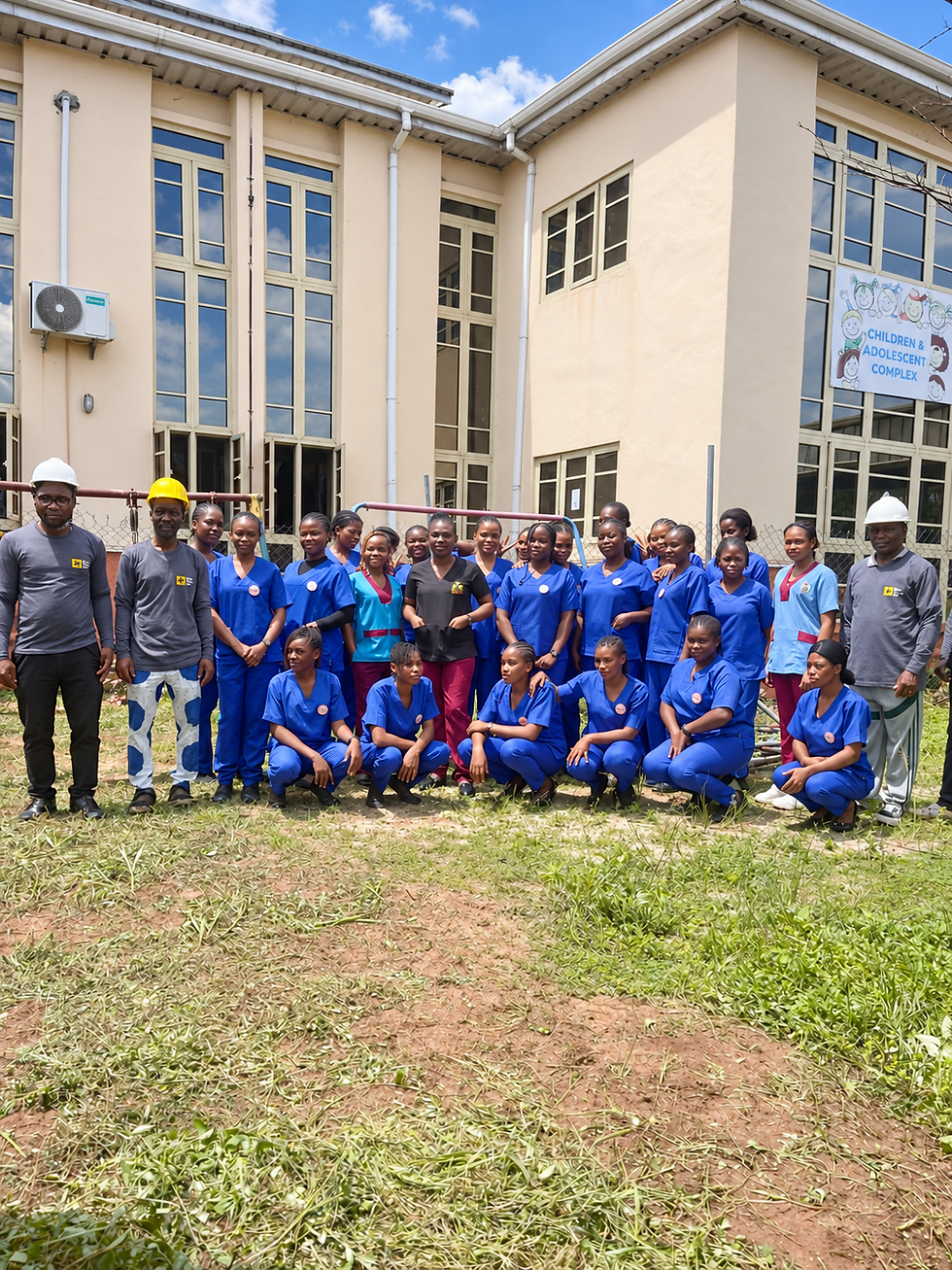
St. Mary’s Children and Community Hospital
In southeastern Nigeria, in Umuowa near Orlu in Imo State, St. Mary’s Children and Community Hospital plays an important role in providing medical care to the local population. As a privately operated hospital, the facility combines medical treatment with a particular focus on the care of mothers and children.
Today, the hospital provides a wide range of medical services and facilities. These include an emergency department, general and surgical wards, paediatrics and neonatology, obstetrics and gynaecology, intensive care, dialysis, physiotherapy, ophthalmology, radiology, laboratory services and a pharmacy. The care of newborns and the treatment of medical emergencies are also part of the hospital’s daily work.

The care of pregnant women and newborns is of particular importance. In 2025, St. Mary’s was officially recognised as a Comprehensive Emergency Obstetric Care (CEmOC) Centre. This enables the hospital to provide essential emergency obstetric and newborn care, particularly for patients in vulnerable situations.
Beyond direct patient care, the hospital is also committed to advancing healthcare in the region. For example, it organises training and continuing education programmes for medical professionals. In July 2025, more than 120 healthcare workers from hospitals, health centres and maternity facilities across the region attended a workshop focused on preventing avoidable maternal deaths.
A Reliable Energy Supply for a Hospital
Modern medical care is hardly possible without a reliable electricity supply. Refrigeration systems, laboratory and diagnostic equipment, lighting, operating theatre technology, dialysis, intensive care and numerous other medical devices require a continuous supply of electricity.
Before the solar project began, a significant proportion of the hospital’s electricity needs was still covered by diesel generators. These generators have to operate around the clock. For the privately operated hospital, the high cost of fuel represented a considerable financial burden.
This is precisely where the Solar Power Aid project comes in: its aim is to provide a sustainable, reliable and secure electricity supply directly on site. The new photovoltaic system reduces the hospital’s dependence on diesel generators while creating the basis for a more cost-effective and environmentally friendly energy supply in the long term.
Solar Power Aid Supports the Photovoltaic System
For the new photovoltaic system, Solar Power Aid donated the mounting structure for a total of 144 solar modules, thereby providing an important part of the project’s technical infrastructure.
Assuming a module output of 550 Wp, the system has an installed capacity of approximately 79.2 kWp. Based on a conservative specific solar yield of around 1,400 to 1,500 kWh per kWp, such a system could be expected to generate approximately 111,000 to 119,000 kWh of clean electricity per year in the region. Actual annual production depends on factors including the type of modules, orientation, shading, inverter technology, location and operating conditions.
Solar energy will therefore become an important part of the hospital’s future electricity supply. Every kilowatt-hour of solar power generated can help reduce the use of diesel generators and allow the hospital to direct more of its financial resources towards its core mission: providing medical care to people in the region.
Energy That Makes Medical Care Possible
The significance of the project extends far beyond the installation of solar modules. A stable electricity supply creates the conditions needed to operate medical facilities and life-saving equipment reliably – even when the public power supply is insufficient.
St. Mary’s Children and Community Hospital continues to develop. Alongside its daily medical services, the hospital invests in modern equipment, qualified personnel, training and cooperation with international partners. Medical aid shipments from Austria have also contributed to the hospital’s equipment in recent years. In July 2025, for example, a 40-foot container shipment containing medical equipment, hospital supplies and solar modules arrived at the hospital.
With the support of Solar Power Aid, another important element is now being added: clean energy for a medical facility that provides care and saves lives every day.
The project demonstrates how direct and targeted support can create a lasting impact. By donating the mounting structure for 144 solar modules, Solar Power Aid is helping to make the energy supply of St. Mary’s Children and Community Hospital more sustainable, reliable and independent.

Here, sustainable energy means one thing above all:
greater security for medical care – today and for the future.

St. Marys Hospital - Umuowa


Thanks.